Read This Before Becoming A Family Caregiver
Taking care of a loved one will change you…
No one tells you that caregiving means becoming responsible for parts of your loved one’s life you never imagined.
Between schedules, symptoms, meds, side effects, pharmacy pick ups, appointments, insurance companies, lab results, cooking, and cleaning, YOU are the one who has to remember and DO EVERYTHING. (And you have to do it all on very little, if any, sleep)
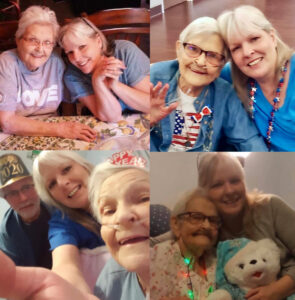
It’s not just taking care of their physical needs. (As time goes on, you will have to see, smell, and clean up more pee and poo than in your whole life combined) It’s being witness to how much they will change right before your eyes. They will go from stubbornly independent to super needy. (At least my mom did) And they transform from energetic and wanting to do things and go places, to completely exhausted all the time. It’s painful to witness.
No one tells you how heavy the responsibility weighs on you. They took care of you as a child, but now you have become ‘their person’, ‘their advocate’. You have to make sure nothing gets missed, or if something is ‘off’, and you have to speak up about it. It doesn’t just go away when you walk out of their room, it follows you everywhere- even when trying to fall asleep at night.
Your life quietly starts disappearing into it. Your routines change, your priorities shift, your personal plans go on the back burner- or stop altogether. Your thoughts shift into an “let me just get through today” mindset.
You carry more than you should because family just doesn’t seem interested in helping or visiting. Of course they all came when she lay dying, and even more to her funeral. But she longed to know they cared enough to visit when she was alive. So why didn’t they? Were they uncomfortable with seeing her like that? Or just too busy? Then, of course, resentment will insert itself. Sit with that resentment for a bit- then LET IT MOVE ON- family is EVERYTHING, and we all mess up.
IF YOU DECIDE TO DO IT ANYWAY AFTER READING THIS-
Remember to:
Get out and shop, dine, and go to movies or the park together in the beginning while they still have energy.
Record them- videos, voices, still shots- these will be priceless to you later.
Something I regret not doing more of is looking at old pictures together and LABELING them. You will regret family tree knowledge ending when your loved one passes- and they will really enjoy doing that activity with you.
After that energy and presence of mind is gone:
Laugh together when you can.
Schedule time with your loved one to watch their favorite TV show with them. (For mom it was Wheel of Fortune)
Find small, quiet moments that still feel like the relationship you had before. Those moments matter more than anything.
No matter your frustration level, caregiving is LOVE. Showing up and staying. Not leaving—no matter how hard it gets. Because they need you, and love doesn’t leave.
What Dolly Parton Said in Her Last Interview Should Terrify Us
Dolly Parton did so much in her life to help others. In her final days, I think she did one last thing that will help millions of people, if we pay attention to her warning and take action.
Just four days before she died, Parton said that she was being treated for health problems that she “didn’t pay attention to when I was watching over Carl.” She was talking about the years she spent caring for her husband through a long illness. The interview moved on to her upcoming projects, and that line went by so quickly that most people missed it. As we reflect on her death, I think it was a clear wake-up call to America.
This is caregiving in 2026. More than 60 million Americans are going through it, a 45% increase over the past decade. We are struggling in the shadows at great sacrifice to our own health and well-being, and caregiving rarely gets airtime as few people want to hear about it. Even worse, hardly anyone wants to talk about it.
In my mid-30s, I suddenly became a spousal caregiver for my wife through her cancer battle. It took an enormous toll on my own health, and woke me up to the harsh realities that millions of Americans face. I realized that supporting caregivers is one of the biggest unmet societal needs of our time, and I decided to dedicate the rest of my life to helping caregivers.
I left my thriving career as a hedge fund manager to build a social impact organization CareYaya, where I’ve worked directly to help thousands of caregivers, people taking care of their spouses and their aging parents, who are caring for loved ones through serious illness, dementia or disability. The toll that millions of us are facing is enormous and completely in the shadows.
But with our rapidly aging population, rising rates of dementia, cancer, and serious illness, all of which place a huge caregiving burden on spouses or adult children, I think now is a critical time to talk about caregiving, before it totally breaks our society. Parton’s death can be the wake-up call to change the societal narrative and bring about much-needed changes to support caregivers.
Parton’s own words suggest that for years, her health was going untended while she tended someone else’s, and that no one caught it. In October 2025, when posting a video to quiet fans who had begun to worry about her health, she said that while Carl was sick and after he died, “I didn’t take care of myself,” and that she had let things slide. A few months later in March 2026, opening the season at Dollywood, she said she had gotten “worn down and worn out.” And in August 2026, she said it a final time, only four days before she passed. For years, one of the most famous women in America was doing the unseen and unheralded work of a caregiver.
We have known for a quarter century that this work can literally kill the person doing it. In the Caregiver Health Effects Study, published in JAMA in 1999, elderly spousal caregivers who reported strain had a four-year mortality rate 63% higher than non-caregiving spouses.
Scientists like Janice Kiecolt-Glaser have mapped in detail the biology underneath this phenomenon. Give a caregiver and a matched non-caregiver an identical small wound, and the caregiver’s wound takes about nine days longer to close. Caregivers’ immune cells show accelerated telomere erosion, the hallmark cellular signature of faster aging.
When Blue Cross Blue Shield went into its own claims database and identified 6.7 million members who were caregivers, it found that caregivers had 26% poorer overall health than a matched benchmark. They were 64% more likely to have high blood pressure, 37% more likely to have major depression, and 34% more likely to have anxiety. Among Millennials, the so-called “sandwich generation” raising their children while managing an aging parent’s illness, the rates of hypertension ran 82% higher and hospitalizations ran 59% higher. The health care system can already see clearly what caregiving does to someone’s own health. It simply has not adjusted the way it responds to help caregivers.
Even when the person they’re caring for dies, the risk does not end, as a well-documented “Widowhood Effect” shows the surviving spouse has an excess mortality of over 30% in the first three months after the passing of their loved one.
So what’s the solution? We can start with making caregiving a diagnosis.
Let’s take high blood pressure as an example. It often causes no symptoms and does not hurt. Yet we screen for it, code it, track it, and treat it anyway, simply for one reason: it reliably increases your risk of dying early. That is the logic of preventative health care, to address the risk factor before it becomes an emergency.
By that standard, caregiving should be at the top of the list. It elevates blood pressure, depression, and inflammation, suppresses immune response, correlates with a measurable rise in mortality. And unlike most other risk factors, it is very obvious who might be affected.
The caregiver is often the person standing in the clinic exam room with their loved one, doing the paperwork and answering questions on someone else’s behalf. Yet currently, they are invisible to our health care system.
In my years as a cancer caregiver for my wife, taking her to dozens of appointments and treatments, I was never once asked how I was doing or how my health was holding up. Only 15% of caregivers have ever been asked by a health care provider how they are doing. Even on the mental-health side, clinicians still lack the diagnostic pathway to bill for supporting caregivers, so even if caregiver burden is documented, it’s not treated because it’s not billable. Our health care system can bill for almost anything these days, yet it cannot bill for one of the most common health exposures in American life.
What else would caregiver support look like?
If you know a caregiver, please stop texting, “let me know if you need anything.” An exhausted caregiver will never ask, and answering requires more work and inventing a task for you. Just name a day and a four-hour window, and show up. Bring food for them and take over the care duties for a few hours, so they can get a much-needed break to go watch a movie, go to their own doctor’s appointment, sit in a park, or take a nap.
If you are the caregiver, treat your own medical appointments as part of the job. Book them at the same time that you book your loved one’s. Tell one clinician on your care team that you are the caregiver, and ask to be checked on, too. That is information the system needs. And think about it as the announcement you hear when you board an airplane: “In the event of an emergency, please put on your oxygen mask before you help others.” If you don’t manage your own health, you may not be capable of helping your loved one.
As a country, we need to see caregivers, name the burden, and pay for it. Register caregivers alongside the patient, and screen them for physical health, mental health, and economic stability, with actual corresponding help. We should fund respite care and tax credits for caregivers. Unpaid family caregivers deliver over a trillion dollars of economic value in care every year, and we need to decide that’s worth supporting.
The next time a caregiver walks someone they love into an exam room, somebody in the room should ask how they are doing, write the answer down, and support them.
That is the memorial Dolly Parton earned, and the best way we can honor her legacy.
Our Beloved Gray Baby 2010~2026

Disclaimer